
Yemisi Joluwe: Her Quest For Crafting Ekiti Agric Epicenter
There's something deeply unsettling about how many of us Nigerians treat people who are doing actual work to progress the nation. I don't mean the talkers or the loud ones who scream every little step they take on social media for publicity's sake. Not even the perpetual commentators on national decline. I mean the real builders. The ones who roll up their sleeves, enter complicated systems, and stay long enough to make something work, creating a working system in a nation with many failed ones.
I've been watching the conversation around agriculture in Ekiti State lately, and I'm reminded again that in this our country, competence is often more provocative than failure. Success, when it is quiet and structured, somehow becomes suspicious. And when it now comes from a woman? Eyebrows are raised. Answers are demanded with intangible questions.
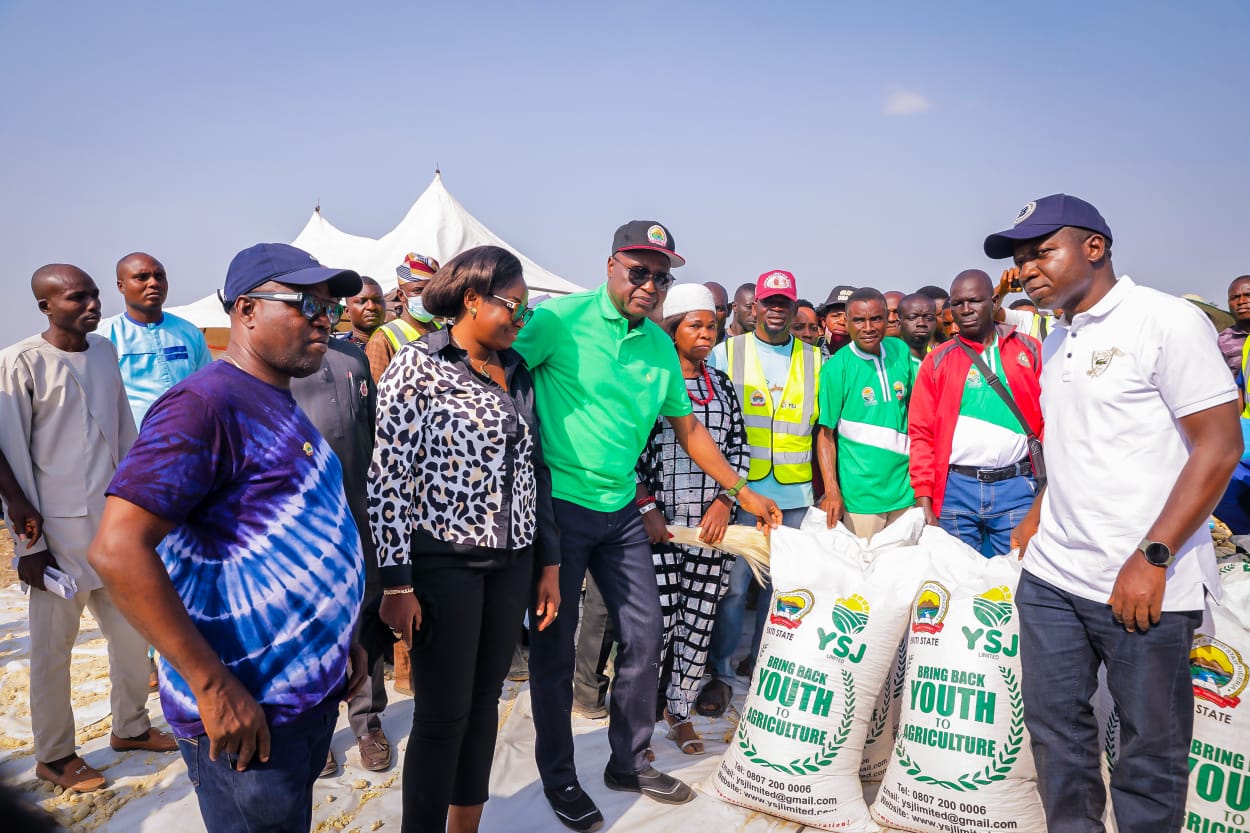
I've seen what Mrs. Oluwayemisi Joluwe, founder of YSJ Limited, is doing. Every Ekiti who wants the success and progress of the motherland will testify. This is not someone theorizing about food security from a distance. She stepped directly into the agricultural ecosystem, investing both money, time, energy, and vision in animal husbandry, crop production, agro-processing, value addition, and large-scale industrial farming projects. Not as charity. But as a system.
You know the saying, when you see a rot, don't just point it out, fix it too. Mrs Joluwe saw a rot in the system, and she took to the soil to fix it. What stands out about her work is not just scale, but philosophy. Her belief that the journey of food must be complete, that agriculture cannot end at planting or harvesting, but must move from origin to value, from soil to market, from labour to wealth. It's a thinking pattern Nigeria desperately needs, yet rarely protects.
Reclaiming Territory Through Agriculture
Remember, it was just two to three years ago, when Ekiti was spoken of in whispers, a place where forests doubled as hideouts for kidnappers, where kings and even children were taken, and fear filled people's daily lives. Farmlands became forbidden lands for Ekiti farmers. That was the reality.
Then the work began. In 2024, as YSJ Limited entered the system under the leadership of Mrs. Oluwayemisi Joluwe, something shifted, not through noise, but through structure. Thirteen local government forests were opened up and reclaimed for productive use, each backed by a 24/7 security presence with 16 personnel stationed on farms. Places like Oke Ako, once infamous for the kidnapping of two kings; Iyemero, Gede, Eporo, Ise (home to the Indian hemp production site), Ose, Ikere, Egbe, Ado, Aramoko, Erio, and Omuo were no longer just names associated with fear, but landscapes that have now been restored to purpose.
Agriculture returned, security followed, and livelihoods replaced hiding. The situation is not perfect, but it is no more a mess it used to be.
After one year of sustained, deliberate work, Ekiti was recognized by the Federation in 2025 as the safest state in Nigeria, a reminder that when land is occupied by productivity, criminals lose ground. This type of story rarely trends, but it is impossible to ignore what Mrs Joluwe is doing in Ekiti: farming didn't just grow food in Ekiti State, it reclaimed territory, dignity, and peace.
From Unemployment to Entrepreneurship
Through planning, structured business models, hands-on training, and collaboration with the Ekiti State Government, YSJ Limited has helped move thousands of previously unemployed youths back into agriculture. They are not even made subsistence farmers, but participants in a modern agribusiness economy. They are made into wealth creators. This is not nostalgia farming. This is organized production, processing, and value creation. This is placing Ekiti State boldly on the Nigerian map.
The Yoruba will say, “Only a liar will say their witness is in heaven”. For these people pointing fingers, hurling insults at trendsetters, YSJ Limited's impact hasn't been theoretical; it is glaring for all of us to see, yet, some have decided otherwise. In 2025, Nigeria Tribune highlighted how these initiatives translated into income, skills, dignity, and long-term opportunity for Ekiti youths. Young people who were once idle are now employers, producers, and contributors. Farmlands that were abandoned are productive again. Food supply chains are stronger. Local economies are breathing.
Imagine taking thousands of unemployed Ekiti youths from broke to entrepreneurs. She didn't give our brothers and sisters hope; she gave them life into their own palms. She showed that with the right initiative, nothing is impossible.
The Cost of Cynicism
So when I see people attacking this kind of work, I don't just feel irritation, I feel concern. Concern because we keep saying we want solutions, but we act out when solutions show up without drama. Concern because we complain about food insecurity, yet undermine those directly confronting it. Concern because we speak endlessly about youth unemployment, yet we become cynical when someone actually creates a pathway out.
Let's be clear: in a country facing looming food insecurity, any effort that strengthens production, trains young people, and secures supply is not optional; it is essential. You don't casually tear down initiatives like this. You interrogate them responsibly. You improve them. You replicate what works.
What Mrs. Joluwe is doing in Ekiti isn't perfect, no serious intervention ever is, but it is intentional, measurable, and rooted in long-term thinking. It understands that agriculture is not a fallback plan; it is infrastructure. It is national security. It is an employment policy. It is dignity. Mrs Joluwe shows this in Ekiti, a footprint to follow.
Recognizing the Builders
And maybe that's the real discomfort for some people. Because building systems is slower than shouting opinions. Because structured impact doesn't trend as easily as outrage. Because it forces us to admit that progress is possible, only if we're willing to protect those who make it happen.
If we truly care about Nigeria's future, if we are true sons of Ekiti soil, we must learn to recognize the difference between noise and work. Between critics and contributors. Between people who benefit from dysfunction and those who quietly dismantle it.
Mrs. Oluwayemisi Joluwe belongs firmly in the second category. And if we keep attacking the best of the best without cause, one day we'll wake up to find that the builders have stopped building, and then we'll finally understand the cost of our cynicism.
Related Posts

In 2024, the most anticipated Dangote refinery in Nigeria began operation. And since then, it has been a tug of war between Dangote, NNPCL, and Oil Marketers. From the Naira-for-Crude, to oil capacit…
I enjoin the world to help me celebrate my elder sister, a woman of grace and valour, on the celebration of her golden jubilee. Writing this piece, I am filled with an overwhelming sense of gratitude…

In principle, as a democrat, I support protests designed to restructure Nigeria because, truly, many things are not okay in our country. We love the government, but there are too many avoidable misde…